EngageRooms, cloud phone, and embeddable widgets
MediaSFUvsVonage
Video, calls and agents on one platform, with your carrier kept direct.
Price your video minutes side by side, then try a live phone agent right here. MediaSFU adds rooms, agents and recordings to the line your carrier already runs.
- From $0.375 per 1,000 video minutes
- Prebuilt UI or headless
- Recording, translation and phone built in
Interactive workload model
Model the workload. See the bill and what you can ship.
Start with a real scenario, then use exact minute inputs. Every result names the billing layer being compared so platform, carrier, and AI-provider costs do not get quietly mixed.
What you can buildThose participant minutes can arrive with the product surface already attached:
- HD rooms
- Live translation
- Recording + notes
- Embeddable widgets
- 10 SDK paths
Comparison scopeVideo participant-minutes
Compares recurring core video usage without treating a new-customer trial as a permanent monthly allowance.
Estimated infrastructure delta$558.75 lower per month$6,705 per year; 10.9x cost ratio
Recording, broadcast composition, HLS, AI connectors, SIP interconnect, support, and negotiated volume rates are outside this line.
Make the decision with evidence: test the workflow, inspect the controls, and replace the sample volume with your own procurement assumptions.
Estimates use MediaSFU list rates and the linked Vonage published pricing available in July 2026. Review Vonage pricing. Free allowances, negotiated discounts, taxes, carrier routes, AI model choices, storage, and optional services can change the final bill. This is a transparent planning model, not a vendor quote.
Try it before you decide
Talk to a live MediaSFU agent, right here.
Four faces on one agent: a character, a phone call, a messenger and a camera concierge. It greets you, answers in real time, and you can interrupt it. About $0.002 a minute to run your own.
What the decision unlocks
Choose MediaSFU when the job is the whole communication workflow.
Use MediaSFU when one launch needs real-time rooms, phone calls, AI agents, translation, recording artifacts, widgets, and SDK control. Keep Vonage in the shortlist when your team already prefers a CPaaS-style channel API stack.
One connected operating modelFrom live interaction to usable output.
Launch the experience, run the workflow, retain the artifacts, and extend it with code when needed.
AutomateAI agents, campaigns, and live translation
CaptureRecordings, transcripts, notes, and summaries
ExtendSDKs, APIs, SIP, domains, and webhooks
Published starting rates
$0.10per 1K audio minutes
$0.375per 1K video minutes
$2+per 1K recording minutes
Unified launch plus developer control
Best when the product must be operated by real teams and extended by engineers.
Enterprise communication APIs and carrier-oriented workflows
Best when that narrower center of gravity is the main buying reason.
LaunchMeetings, cloud phone, campaigns, widgets, rooms, notes, and recordings are usable without rebuilding the product surface.
ExtendSDKs, API keys, domains, SIP configs, provider keys, and webhooks remain available when engineering needs precision.
AuditCalls and sessions can produce logs, transcripts, AI notes, summaries, recordings, and downloadable artifacts.
Ask before choosing:
- Will non-developers run calls, campaigns, rooms, or notes after setup?
- Do phone, WebRTC, widgets, AI, translation, and recording need to work as one flow?
- Are you comparing total workflow cost instead of one isolated API line item?
MediaSFU advantage
The stronger comparison is the complete workflow.
Against Vonage, MediaSFU is most compelling when the buyer needs live media, phone calls, AI workflows, translation, recordings, and usable apps to work together without forcing every team into a developer-only rollout.
Launch from guided apps
Use meeting rooms, Lite Dashboard, cloud phone, AI campaigns, managed numbers, and built-in AI notes/transcripts where the plan includes managed MediaSFU services.
Keep provider and SDK control
Bring SIP providers, AI keys, widgets, domains, API keys, webhooks, and SDK integrations while still relying on MediaSFU for the room, media, telephony, and workflow surface.
01
Translated audio, not just captions
Participants can speak naturally while MediaSFU plays translated room audio. A French speaker can be heard in German, and listeners can keep or override their output language.
02
Phone, AI, and human handoff together
Inbound and outbound calling, managed numbers, AI receptionists, callback flows, and human handoff use one operating model instead of a stitched call stack.
03
A complete meeting product surface
SDK-backed meetings can include screen share, messaging, polls, whiteboard, breakout rooms, widgets, recordings, and room controls without starting from bare media primitives.
04
Recordings become review assets
Recording workflows support pause/resume, playback, transcripts, AI notes, summaries, and downloadable artifacts for review, compliance, or customer follow-up.
05
Ready apps plus developer control
Operators can use meetings, cloud phone, AI campaigns, and Lite Dashboard flows. Developers still get APIs, SDKs, webhooks, SIP configs, widgets, and provider-key control.
06
Plain SIP/PSTN stays plain
When calls do not use AI, MediaSFU positions the workload around audio infrastructure plus your carrier/provider path, not an extra WebRTC/SIP bridge billing layer.
Pricing lensAudio, video, and recording rates in readable units
Use these as MediaSFU-side inputs before comparing vendor-specific bundles, add-ons, or carrier charges.
| Workload | Dollars | Cents | 1K minutes | How to read it |
|---|---|---|---|---|
| Audio transport | $0.0001/min | 0.01¢/min | $0.10 per 1K min | Use for audio rooms and plain SIP/PSTN media transport. |
| Video transport | $0.000375/min | 0.0375¢/min | $0.375 per 1K min | Starting rate, at QnHD (320×180); SD is $0.00075/min. Add-on services are separate. |
| Recording - audio only | $0.002/min | 0.2¢/min | $2 per 1K min | Audio-only recording derived from the recording purchase factors. |
| Recording - video SD | $0.006/min | 0.6¢/min | $6 per 1K min | Baseline SD video recording minute pricing. |
| Recording - video HD/FHD/QHD | $0.012 - $0.024/min | 1.2¢ - 2.4¢/min | $12 - $24 per 1K min | HD, FHD, and QHD video recording scale by recording quality. |
From comparison to working product
Browse all live experiences See the broader MediaSFU story in context.
A rate or feature row cannot show how the pieces work together. These product-shaped experiences make the room, media, operator, audience, and integration surfaces tangible.
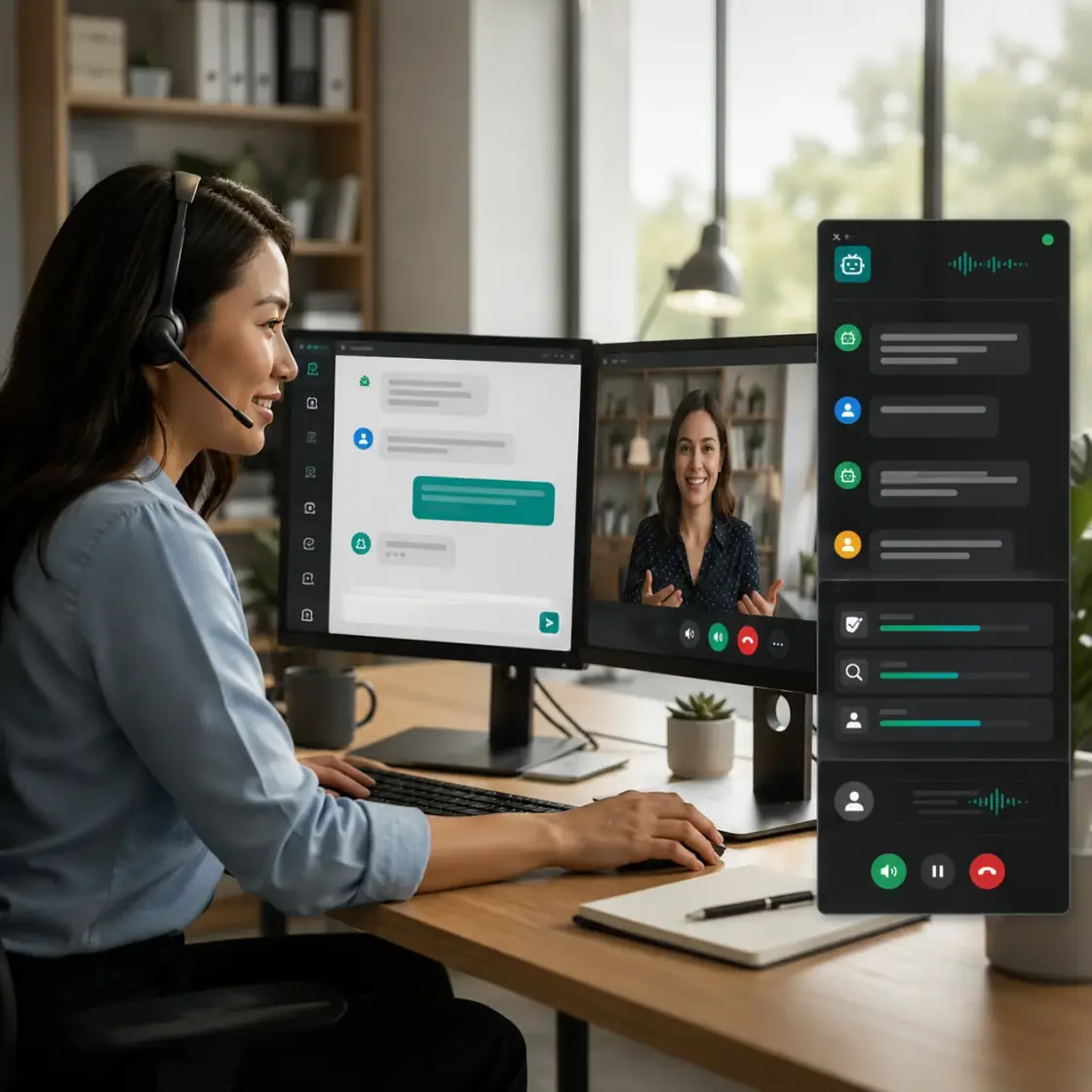 Agents + human handoff
Voice and vision agents
See provider-flexible agents, ordered realtime audio, operator controls, and a path from automation to a person.
Explore agent workflows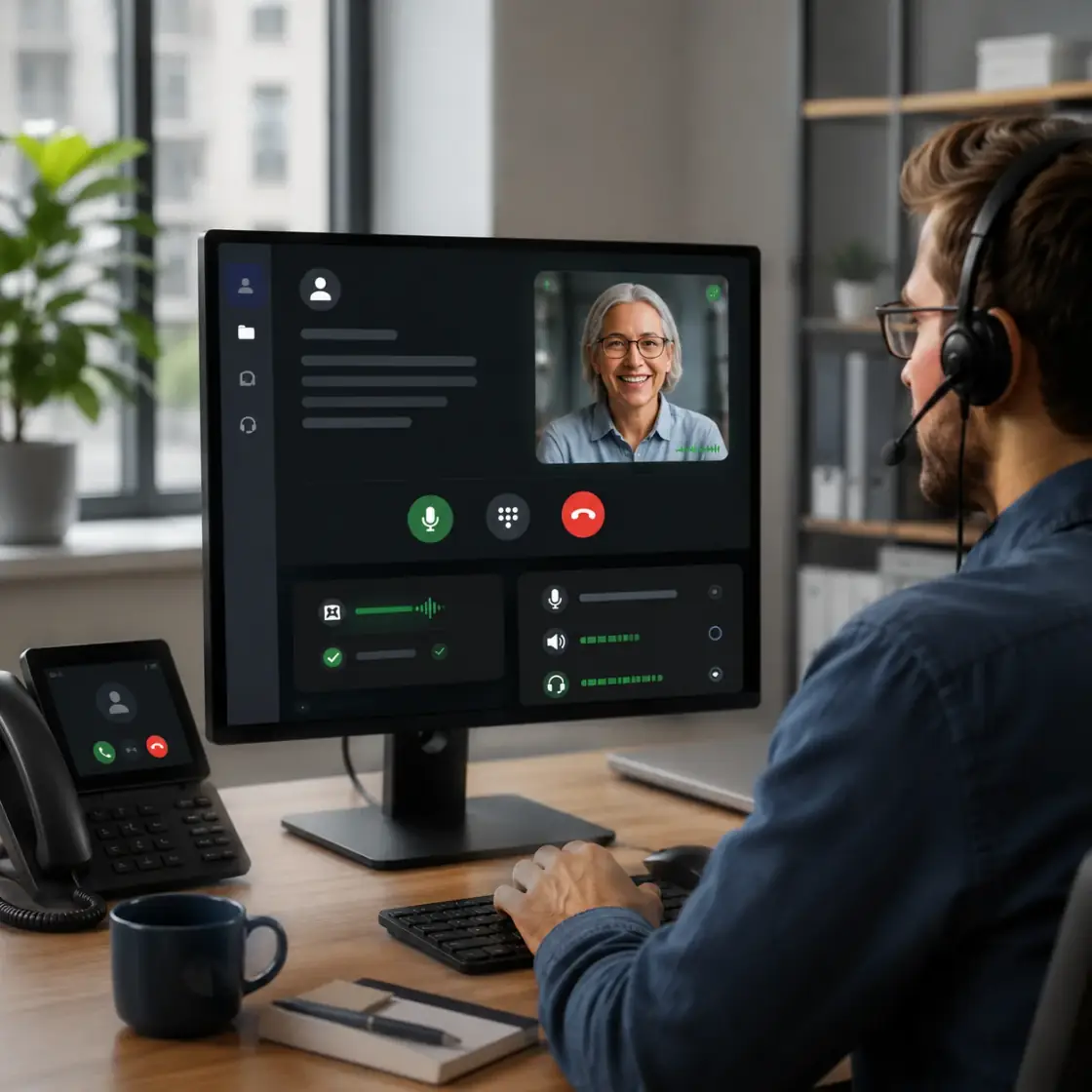 Runnable showcase
Familiar two-person calls
Inspect a polished calling experience with self and remote media, a draggable mini view, and focused call controls.
Open familiar calls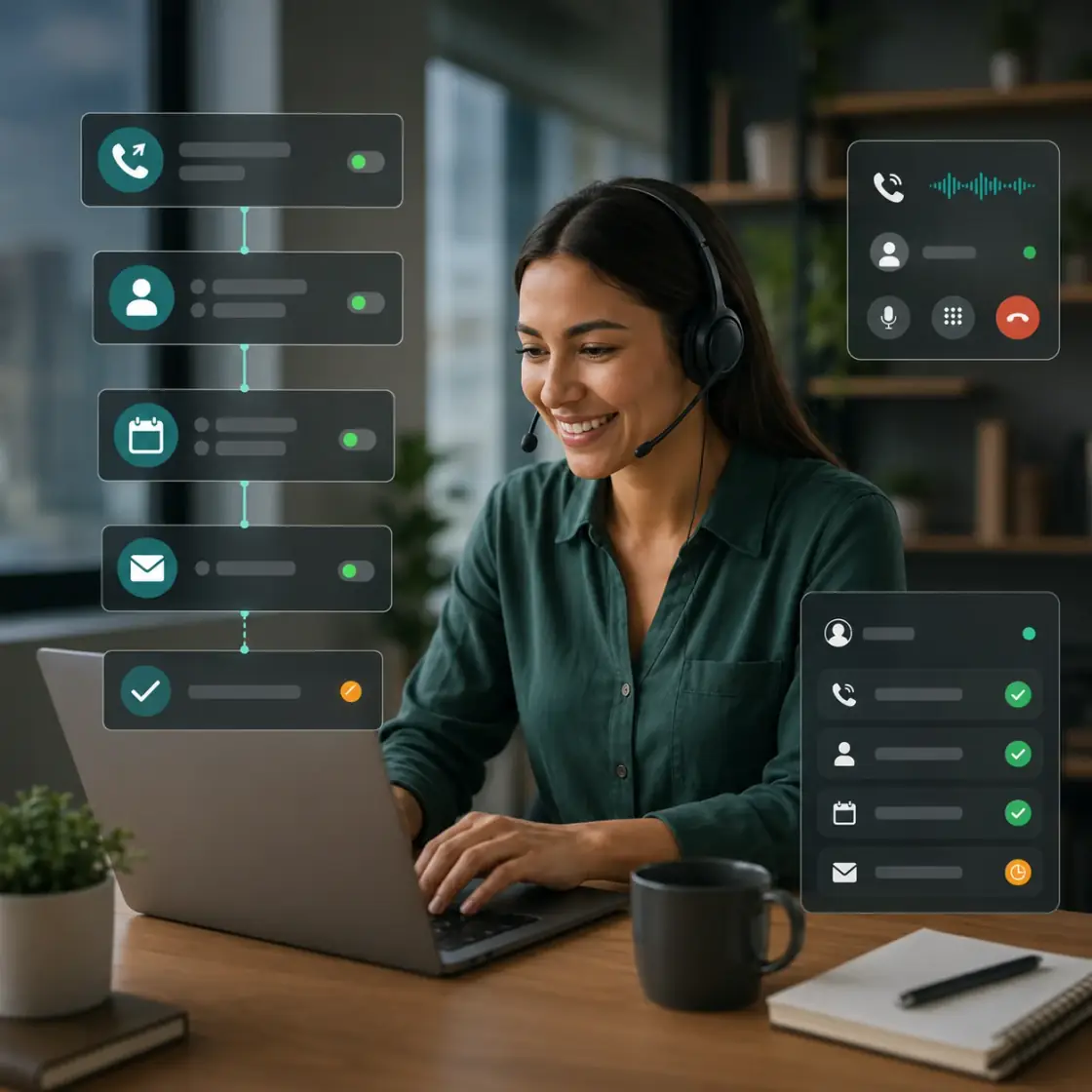 Product workflow
Cloud phone and SIP
Connect browser calls, SIP/PSTN routes, dialing state, agent automation, and person-to-person takeover in one operating path.
Explore phone and SIP| Category | MediaSFU | Vonage |
|---|---|---|
| Platform model | Unified meetings, calling, SIP/PSTN, AI agents, and widgets | Communications APIs with programmable voice and messaging focus |
| Voice and telephony coverage | Integrated cloud phone and SIP/PSTN deployment paths | Strong telephony APIs with multi-service implementation patterns |
| AI-agent workflow surface | Integrated voice-agent paths and guided rollout docs | Typically composed with external AI model and orchestration layers |
| No-code embed options | Widgets and dashboard-led deployment options | Developer-first API integration model |
| Best-fit team profile | Teams consolidating communication and AI stack in one place | Teams prioritizing programmable telecom APIs and custom build control |
| Cost comparison posture | All-in stack economics including media, telephony, and AI paths | Per-service API economics depending on architecture and route mix |
Assumptions behind the benchmark
| Variable | Benchmark baseline | Why it matters |
|---|---|---|
| Route profile | Representative inbound/outbound destination mix | Regional route mix can materially shift telephony totals. |
| AI provider ownership | Team-selected STT, LLM, and TTS service stack | Provider choices can dominate AI workflow economics. |
| Stack breadth | Need for voice plus meetings, translation, and widget surfaces | Broader scope can increase composition overhead in multi-vendor builds. |
| Operations load | Production monitoring, routing, escalation, and support requirements | Long-term operations cost should be part of platform selection. |
Sources and validation links
Validate with current vendor rates and your own production route and traffic profile before procurement.
Last updated: August 25, 2026
Built on MediaSFU
Open a finished room, then take the code
Complete products on the same SDKs this page compares. No account, nothing to install.
See all six reference experiences