8 people, 30 minutes, 720p video
Managed mediasoup
Keep mediasoup. Drop the ops.
MediaSFU runs mediasoup for you: workers, regions, TURN, recording and scaling. You ship the product with ten SDKs, prebuilt or headless, and start with 50,000 free minutes.
50Kfree minutes to start
$0.10per 1,000 audio minutes
10SDKs, web to Unity
Room.jsxnpm i mediasfu-reactjs
import { MediasfuGeneric, PreJoinPage }
  from 'mediasfu-reactjs';

export default function Room() {
  return (
    <MediasfuGeneric
      PrejoinPage={PreJoinPage}
      // Sandbox key to try it. In production,
      // create rooms from your server.
      credentials={{
        apiUserName: 'USER',
        apiKey: 'KEY',
      }}
    />
  );
}
Video, audio, screen share, chat and recording controls. Set returnUI={false} to drive it from your own UI.
What changes
The work you stop carrying.
mediasoup gives you the routing engine. Everything around it is yours to run, until it isn’t.
Responsibility Self-hosted mediasoupOn MediaSFU
SFU workers and routersYou size, deploy, patch and restart them Run and scaled for you
Regions and room placementYou wire regions together with pipe transports Rooms placed near the people in them
TURN and NAT traversalYou run relay servers and their certificates Included
Signaling and room lifecycleYou design the protocol and its edge cases Room and event APIs, webhooks
RecordingYou build and operate a recorder Server-side, billed per resolution
Clients beyond the browserYou find or write them Ten SDKs: web, mobile, desktop, Unity
The UIYou build every screen Prebuilt UI, widgets, or headless
Phone, translation, AI agentsSeparate projects, each with its own stack Same room: SIP/PSTN, live translation, agents
Self-hosting is still the right call when the media servers must run on your own hardware. Our open-source clients below work with your server too.
What it costs
Priced per participant-minute, at the resolution each person runs.
Audio is $0.10 per 1,000 minutes and video starts at $0.375. Here is what three real sessions come to on published rates.
1 HD speaker, 300 viewers at 360p, 1 hour
50 people, audio only, 1 hour
Transport only, before recording. Volume discounts reach 40%, and you start with 50,000 free minutes.
Model your own workloadAlready on mediasoup?
Two ways in, and neither is a rewrite.
Keep your server, add our clients
mediasoup ships a JavaScript client. We maintain the ones for the platforms it doesn’t cover, in the open, and they work with any mediasoup server.
Move the rooms, keep your UI
Point your app at MediaSFU rooms and drive them headless: your components, our media, recording, phone and translation behind them. Swap one room type at a time.
- Headless mode in every SDK
- Room and event APIs, webhooks
- Bring your own AI and SIP providers
Running on it today
Browse all live experiences Open a finished product built on these rooms.
Each one runs in your browser on the same SDKs, and each has a public starter you can copy.
 Runnable showcase
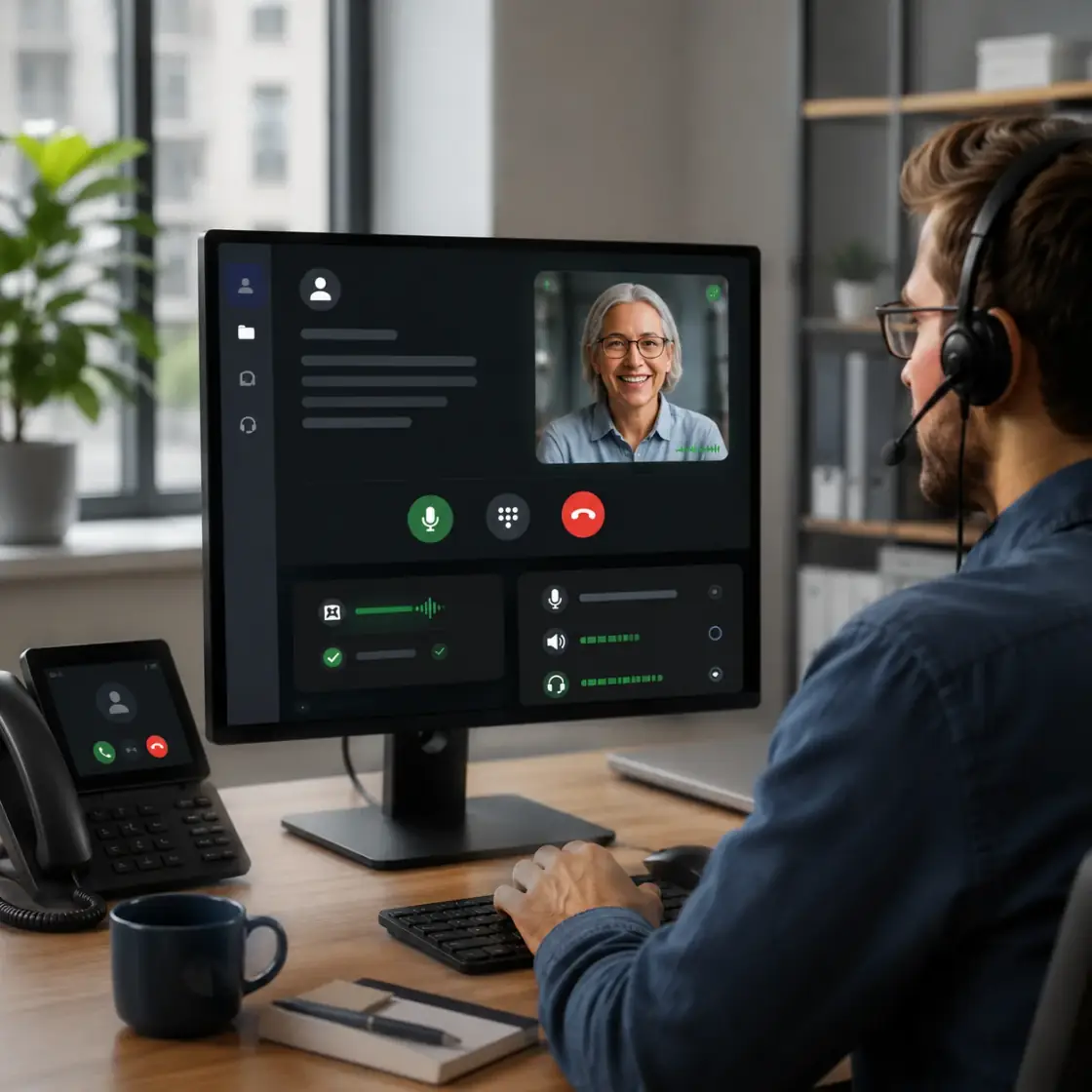
Familiar two-person calls
Inspect a polished calling experience with self and remote media, a draggable mini view, and focused call controls.
Open familiar calls Runnable showcase
Interactive live broadcast
Move from an interactive WebRTC control room to audience-scale viewing while preserving production controls.
Open broadcast control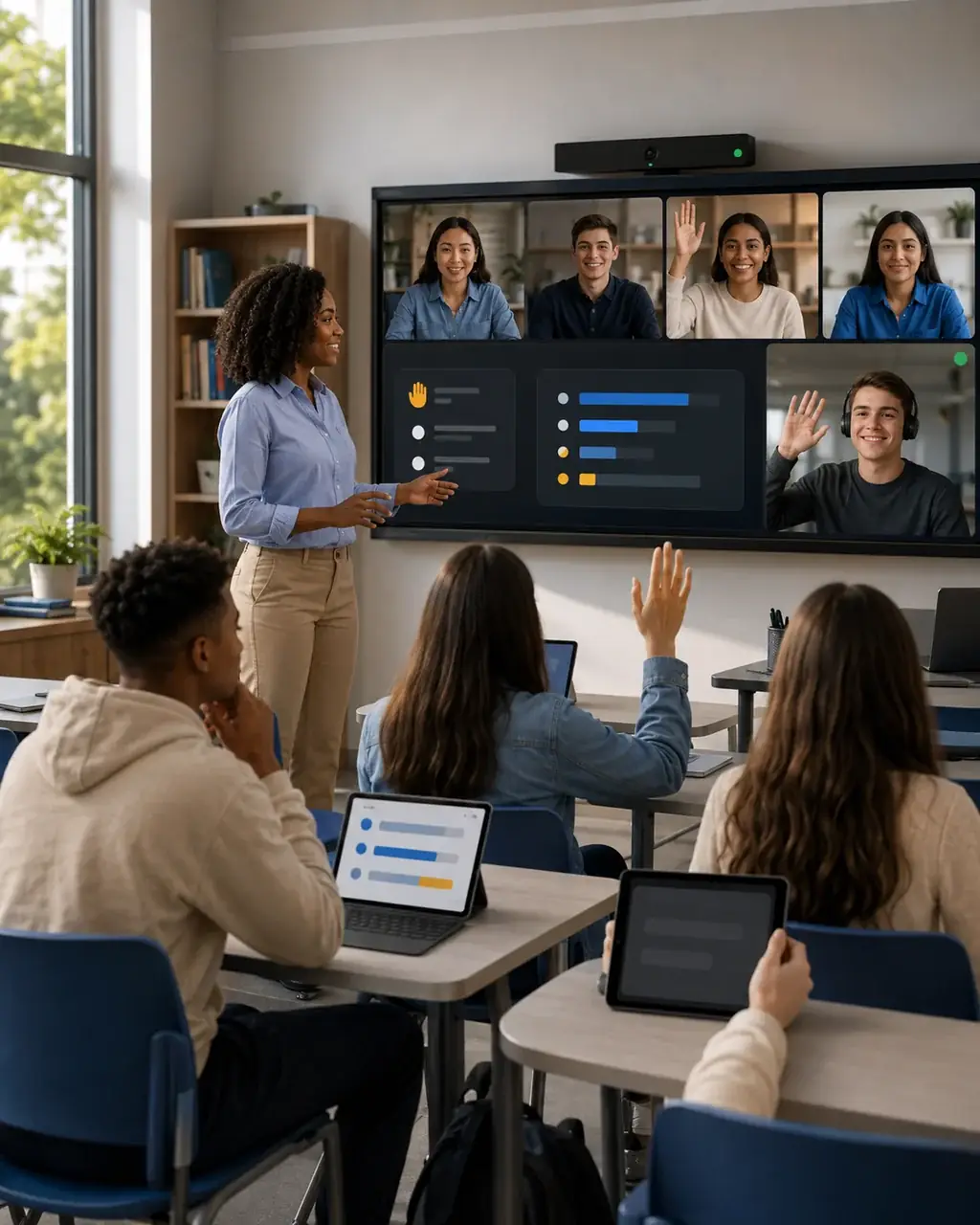 Runnable showcase
Interactive classroom
Explore a teaching surface shaped around participation, media, screen sharing, collaboration, and instructor control.
Open the classroomQuestions engineers ask
Short answers before you choose the stack.
Is MediaSFU a fork of mediasoup?
No. mediasoup is an independent open-source SFU, and MediaSFU runs it as the routing foundation of a managed platform. We maintain open-source mediasoup clients for Flutter, Android, Apple platforms and Unity that work with any mediasoup server.
What does it cost?
You pay per participant-minute at the resolution each person runs: audio is $0.10 per 1,000 minutes and video starts at $0.375 per 1,000. Recording is billed separately, volume discounts reach 40%, and new accounts start with 50,000 free minutes.
What does MediaSFU add?
MediaSFU adds managed infrastructure, room and event APIs, SDKs, prebuilt UI, widgets, recording, telephony, translation, AI workflows, and operational tooling.
Can I bring my own AI and SIP providers?
Yes. Supported provider relationships remain direct, which keeps provider choices and their charges visible rather than hiding them inside one bundled rate.
Can I self-host instead?
Yes. MediaSFU Open is the self-hosted edition, published on GitHub. You can start on the managed cloud and move rooms to your own servers later, or the other way round.
What if we leave later?
Rooms, events and recordings stay reachable through documented APIs and webhooks, the SDKs are open source, and our mediasoup clients work with any mediasoup server, so the exit path stays open.
Ten minutes from now